

There are many advantages and disadvantages to running indoors on a treadmill and outdoors on the streets but is one really better than the other? What about if you’re running for recreation or training for a marathon?
The debate has an obvious starting point:
Running indoors on a treadmill can be boring. The runner is stuck in one place for the duration of his workout and never gets anywhere. Outside, a runner can take different routes depending on what he wants to look at or how he is feeling on a particular day. He can choose to run along the streets, through parks or in the countryside.
This post contains affiliate links. As an Amazon Associate I earn from qualifying purchases. Purchasing via these links gives me a small commission at no cost to you. Please see my privacy policy for more information.

The Dangers of Indoor Running and Outdoor Running
On the streets, a runner is at risk of being attacked or being struck by a vehicle. To avoid this, she should aim to run during the daytime and avoid deserted areas. If a runner must run at night, it is best to stick to well-lit areas and avoid shortcuts such as alleyways.
Basic road safety should be adhered to at all times. If running on the road, a runner should face the oncoming traffic, and care should be taken when crossing any road. If running outdoors at night, a reflective vest and lights are smart choices for keeping you safe. And always make sure you have ID!
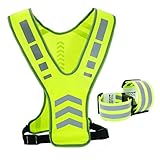
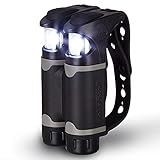

Another danger a lone jogger faces outside is the risk of injury. If she were to pull a muscle or fall and sustain an injury, who would come to her aid? In busy areas, this is not so much of an issue as there would be plenty of people willing to help, but in more remote areas, it is probably wise to carry a mobile phone or tell someone where she is going and when to expect her back.
Running on a treadmill may seem a safer option at this point; however, gyms are not entirely safe. Most gyms use air conditioning units to keep the temperature down; this means that any germs a user takes into the gym environment will get sucked up and pumped back out into the air for the other users to breathe in. Just think of all the air the body takes in while it is exercising. It’s not a nice thought at all!
There is also the consideration that if a runner logs most of her miles on the soft, forgiving surface of a treadmill, she might be more likely to feel a niggle or injury when she does run on the hard pavement. If you plan on doing any road races, make sure you do some outdoor running to get your joints used to the pounding.

Running on Treadmill vs Outside: Level of Control Over Your Workout
Runners on treadmills generally have more control over their workout as they can set their speed and measure their heart rate and the distance they travel quite easily.
Outdoor runners may not have the same amount of control over their run, but they can wear a heart rate monitor and track their run on the internet to measure the distance of their route.
The type of training a runner wishes to do will also depend on his decision to run on a treadmill or outdoors. For example, hill climbs are easily done on a treadmill as the runner will simply increase the incline. To complete a hill climb outdoors, a runner will need to find a hill. This could be some distance from his home.
(Or if you live in a very flat area, hill workouts can be done on parking garage ramps. This requires absolute awareness of your surroundings at all times!)
Sprints, however, are easier to run outdoors. Most treadmills take a few seconds to adjust their speed, while a runner on the ground could just take off when he is ready. Outdoor running is also better for sprints because the deceleration is more natural, too, thus reducing the injury risk.
That said, treadmills are a fantastic tool for interval or pace/tempo workouts if you are trying to teach your body to run at a specific pace. Instead of needing to find an accurately measured course or track, the treadmill is perfectly calibrated for measuring distance and speed. Some models of treadmills can be pre-programmed for specific intervals. Higher-end treadmills offer interactive workout options where the intervals and incline are controlled by the workout coach.

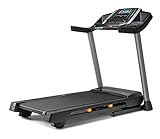

One thing to be aware of is that running on a treadmill at zero incline is much easier than running outdoors on a flat piece of land. Even if you’re running on flat pavement, the tread band of a treadmill moves your foot incrementally every step, propelling you with less effort.
To mimic running outdoors on a treadmill, running coaches usually advise their clients to raise the incline to one to two percent to compensate. This small increase in incline counteracts the “help” you get from the treadmill moving underfoot.
Considering the level of control you want over your workout will likely help you choose whether to do your running on a treadmill or outdoors.
Temperature and Weather Variances (aka Do you burn more calories running in the cold or heat?)
Gyms offer a controlled environment in which to exercise, which makes them ideal for training all year round. This does not mean that outdoor runners can only train at certain times of the year – they just need to plan their training times and clothing a little more carefully.
In the winter, make sure you have the best winter running clothes to keep warm (but not too warm) during your workout. Check the pavement or road where you intend to run– it can be unsafe to run on snow or icy pavements. If you live in a climate with regular snow and ice, a pair of strap on cleats for your shoes. The added traction will keep you running outside all winter.
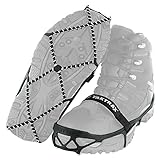
- Traction cleats that fit over shoes for safely walking, hiking, or jogging on packed snow or ice
During the summer, a runner will usually avoid training during the hottest part of the day. In some climates, the humidity plays a big factor on when to time training runs. Knowing how your body reacts to heat and humidity and planning your runs accordingly is a smart choice. Carrying a water bottle with you during outdoor runs in the summer is wise.

Treadmill training offers consistent temperatures all year round. While this may sound comfy and cozy and allow you to stay consistent with your workouts, you’re likely to face less pleasant weather on race day. May as well train for it!
What About an Indoor Running Track?

If you have access to an indoor running track, this can be an excellent option to keep in your training regimen.
An indoor track offers a more natural running feel than running on a treadmill. It has the benefits of protection from the weather and being a softer surface. Indoor running on a track- particularly those found in hotel gyms- can be annoying because there are often walkers who block the track. Don’t be afraid to politely ask the walkers to move to an outside lane as per track protocol.
From experience, I have completed a 15-mile training run on an indoor running track that is 13 laps to the mile. Quick math will tell you that is 195 laps. It’s a lot of laps, but it was better than running in a thunderstorm!
Do you Tune In or Tune Out while Running?
If you find it hard to stay motivated during a workout, tuning out by watching TV can make indoor running on a treadmill quite appealing.
Are you a music or podcast junkie? Making sure you have quality earphones will help you not miss a word as the miles fly by. If you’re more of an outdoor runner, bone conduction earphones are a safer alternative to earbuds. You still get your music, but you can hear traffic (or predators) as well.

- Rebranding Update - Aftershokz has been renamed as Shokz. Welcome to SHOKZ!
If you like to use running as your meditation time and really tune into your body, you’re probably an outdoor runner. Being able to have a change of scenery and think about what you’re passing may help the time fly as you run.
But if you worry about your safety, it might be easier for you to tune in to yourself in an indoor running workout. There are fewer factors out of your control.
Running Indoors or Outdoors, Which is Best?
Running indoors and outdoors each has different advantages and disadvantages. A runner should weigh up the safety of his neighborhood, the type of training he wants to do, and extreme weather conditions before making a decision. Ultimately, however, the decision will come down to personal preference.
Remember, though, if you are training for a race, it’s a smart choice to do the bulk of your training in conditions that will mimic your race course, climate, and surface. You’ll feel confident and prepared for race day!
Karen Shopoff Rooff is an ACE certified personal trainer and health coach with more than 20 years’ experience running marathons and ultramarathons. The Marathon Finish Line blog is for informational purposes. Please seek advice from a medical practitioner before engaging in a new fitness program.