

For new moms who run, there are a lot of questions surrounding postpartum running. When is it safe to run again? What should I look out for? Will my body ever be the same? When can I get back to marathon training?
As a certified perinatal fitness specialist, a lifelong runner, and the mom of three kids, I have heard all of these questions. And I have the answers for you!
This post contains affiliate links. As an Amazon Associate I earn from qualifying purchases. Purchasing via these links gives me a small commission at no cost to you. Please see my privacy policy for more information.

When can I start running after giving birth?
It depends. (I know that wasn’t the answer you wanted.)
Guidelines in the British Journal of Sports Medicine say to take twelve weeks off after delivery. As a general rule of thumb, this conservative guidance is warranted.
But each woman and each pregnancy is different. Returning to running after birth depends on a number of factors, not the least of which are your fitness level during pregnancy, the smoothness of your delivery, and your energy levels in the early postpartum days and weeks.
You should consult with your healthcare provider about your plans for postpartum running. You should ask your care provider what her opinion is about your return to running after pregnancy.
Note that even if this is your second or third or fourth child, ask again! Your body changes over time, and your state of fitness going in to your pregnancy is different each time. And there’s often new studies to consult for the latest guidelines.
Keep the lines of communication open with your care provider. If you feel that she does not value your input, it’s time to find a different professional.
What are the clear red flags I should look for when running after giving birth?
- It doesn’t feel good. Yes, running is uncomfortable and challenging. But if your body feels off and your mind isn’t on board with returning to running, you’re not ready yet.
- If running makes you feel pressured– to the point where NOT going for a run makes you feel like you’re a failure, you’re not ready yet. (And that’s okay!)
- If your lochia (postpartum bleeding) has stopped or slowed considerably but then returns or increases after you run, you’re not ready yet. Seeing blood clots after a run is a sure sign that you need to take it easy a little while longer.
My postpartum body just feels weird. How long will it take for running to feel normal again?
Again, the answer to this question is highly individualized. Some women feel “normal” within a few weeks of giving birth. Others take months or even years to adjust to their new normal. There is no standard guidebook.
Not only is there no standard woman-to-woman, but pregnancy-to-pregnancy an individual woman will likely feel different in each postpartum period.
Postpartum running is a great opportunity to throw out your old standards and start fresh. Leave your expectations at home. You are a different person than you were before pregnancy, so holding yourself to the same standards isn’t realistic.
That’s not to say that you’ll never get back to where you were! Many women come out of the postpartum period running even stronger than before.
(Do you know how strong you get pushing a jogging stroller? Even the best ones take loads of extra work!)
But if you set your expectations realistically, you’ll find more joy in the process as you return to running after pregnancy.
The cool thing is that by tuning in to your body and what it needs, you become more aware of the small messages your body sends you all the time. You can use this to your advantage—both in your running and for your overall health.
Honor your body and its journey.

How can I enjoy postpartum running without getting injured?
The best way to prevent injury is to build up your mileage slowly. Just because you could go out and run for an hour at eight month’s pregnant (good for you!) or you ran a marathon just before pregnancy, that doesn’t mean postpartum running mileage starts right where you left off.
The most prudent approach to rebuilding weekly mileage is to start with a run-walk plan. Build your endurance by going for walks, and mix in short running intervals as you feel capable. Over time, lengthen the running intervals and shrink the walk breaks (either in time or frequency).
I advise keeping some form of walk breaks even as your running intervals lengthen. You can use the walk breaks to rehydrate, which is essential if you are breastfeeding.
Most importantly, in the early postpartum months, be aware of anything that feels out of sorts. Back off.
You may still have some relaxin in your body, the hormone that creates joint laxity. Also, your pelvis may not be in its most optimal position. Small niggles are an indicator that things aren’t back to 100% yet. Listen to your body.
This is a tortoise-and-the-hare time of your life. There are no medals being handed out for postpartum running.
What is prolapse?
Prolapse is a medical condition that should be taken seriously. It is when internal organs have slipped out of place and are either partially or completely falling outside the body. Prolapse will not just fix itself with time.
Learn more about prolapse and fitness essentials to help prevent it from happening from Dr. Brianne Grogan, author of Lady Bits.

- Grogan DPT, Dr. Brianne (Author)
Finding the right professional support to diagnose, treat, and heal your prolapse is essential for your long-term quality of life. If you want to return to running after pregnancy, you must make sure your internal organs are all in their proper places.
How do I know if I have a prolapse?
The care provider you saw during pregnancy should check you for prolapse at your six or eight week postpartum checkup. They will do an internal vaginal exam to make sure your organs are sitting in their proper position.
Please note, just because you had a c-section doesn’t mean you’re in the clear regarding prolapse! The weight of your baby in utero put a lot of downward pressure on your pelvic organs. (Remember how you had to pee all the time in late pregnancy?) So make sure you have an internal exam at your postpartum check, too.
Also, it is possible to develop a prolapse even after your postpartum checkup. If you feel a heavy or dragging sensation in your crotch, stop running immediately. If you feel like there is something falling out of you, stop running immediately.
Heaviness in the pelvis or organs slipping are both red flags for running postpartum, and you need to see your healthcare provider immediately.
What should I do if I have (or suspect I have) a prolapse?
Do not run.
You need to return to your care provider and have an internal assessment. You will likely be referred to a pelvic physical therapist for further treatment.
Do not be embarrassed. Prolapse is extremely common. Just because no one is talking about it doesn’t mean you’re the only one suffering!
Getting the help you need from trained professionals will get your body back in working order again. That means back to your running more quickly– and in a safe, healthy body!
What if I’m breastfeeding? Will that affect my running?
There are several different ways breastfeeding may affect your return to running after delivery. The good news is that none of them require you to stop running!
Smaller breasted women may experience discomfort when running with their bigger, fuller breasts. Ensuring that you wear a quality sports bra will help to minimize this discomfort.
Larger breasted women may find that in the early months of breastfeeding running is simply too uncomfortable to attempt. That’s not unusual.
This may be a good time to try hiking or hill walking as a way of still getting outside for your workout, but without the impact.
If you’re determined to keep running, I suggest you wear a sports bra specially designed for high impact activities but that doesn’t compress your breasts. Getting fitted by a sports bra specialist at your local women’s athletic shop is ideal.



Regardless of your breast size, if you’re breastfeeding you don’t want to keep the girls smooshed in a sports bra for any longer than necessary. That compression can restrict milk production or bring on mastitis.
Scheduling your runs around your baby’s feeding schedule is another consideration. It is most comfortable for you and likely easiest for baby for you to run just after a feed. Getting this timing to fit in with the rest of your day may take some work.
Remember, though, that the mental and physical benefits of exercise are worth it! You’re also showing your baby from the beginning that you value your health and are willing to adjust your schedule to keep consistent with your workouts.
What are the pros/cons of running with a jogging stroller?
The pros are pretty obvious: Using a jogging stroller allows you to run without having to have someone watch your baby. It provides a tremendous amount of flexibility in baby’s first year, when living on a schedule may not be your reality.
(I have three kids. This is the voice of experience talking!)
Physically, running with a jogging stroller can present some form issues. To prevent injury or muscle imbalance, make sure that the jogging stroller you choose fits your body well.
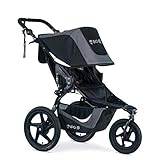
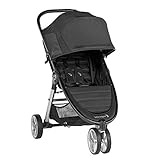

If you’re a serious runner (or even a serious recreational runner), investing in a high-quality running stroller is well worth it. The brands with the higher price tags are not only easier to use– which makes postpartum running more enjoyable– but they retain great resale value.
Pay attention to your posture as you run, and if you feel any niggles rise up, don’t try to run through them. Make an adjustment in the stroller or see if you can do a few stroller-free runs to loosen your body up again.
But if you are someone who has always used your running as your escape, your “me time,” you may find that you resent the jogging stroller. Sure, getting out for your run is better than not running, but if you really crave your alone time on your runs, it’s not ideal.
Being able to speak up for yourself and your needs—especially as a new mom—is critical for your mental health.
Is there any specific cross-training I should be doing to support my return to running?
Most people think running is all about the low body—strong quads, powerful glues, and chiseled calf muscles. While all of those things are true, having a strong core is essential for good running form. This is especially true for postpartum running because of how the pelvis shifts during pregnancy and delivery.
Ensuring that your core muscles are strong and working together will help you run stronger sooner. Choosing tummy-safe fitness routines as you build back up to your regular running will keep your body healthy and whole.
My doctor said I have a diastasis. What is this and how will it affect my postpartum running?
Diastasis recti is a condition where the top-most abdominal muscle—the rectus abdominus—pulls apart at the midline of the body. The problem with a diastasis is that is means that the body lacks the core stabilization that is important for maintaining good running form.
Furthermore, diastasis recti often contributes to a slackening in the pelvic floor. Without the pelvic floor working properly, many postpartum runners experience stress incontinence—peeing on themselves while running. No one wants that!
Healing diastasis recti does not have to be scary or difficult! Knowing which exercises to do—and which to avoid—is key. Consult with a qualified, certified perinatal fitness specialist to find a program that will heal your diastasis and get you back to running.

Am I doomed to pee on myself while running for the rest of my life?
No! While there is plenty of chatter online from running moms about how being leaky is “just part of being a mom and a runner” it’s just not true! Stress incontinence, especially peeing-while-running, isn’t something you just have to live with.
While there is a growing market of specialized underwear for catching these leaks, getting your body healed is the Gold Standard option.

- Maximum Protection: absorbent mid-section is equivalent to 2 x tampons
Think about this: if you’re experiencing stress incontinence now, what do you think it will be like after another 40 years of living on this gravity-laden planet? It’s not going to get better, and it’s very likely going to get worse! Take the time NOW for physical therapy or corrective, specialized personal training to improve pelvic floor strength and coordination. Your 85-year-old self thanks you.
Is running a marathon in the same year as giving birth a realistic goal?
Once again, it depends!
I certainly wouldn’t suggest a new mom pin her hopes on completing a marathon in the year after her baby is born. Anyone with a newborn can tell you how much of your life is out of your control.
That said, for a woman has realistic expectations for the marathon training process and event, setting a goal race can give you the motivation and structure you crave in your new mom world.
But if you’ve been given the go-ahead by your physician to return to exercise, a long and steady build up of mileage can give you a great base to then start a marathon training plan.
As mentioned above, you’d want to be hyper tuned in to anything that feels off in your body and stop at the first sign of injury. You should also be prepared to alter your running schedule to align with your baby’s feeding patterns (or be willing to change feeding options).
From experience, I can tell you that running a marathon in the year after giving birth was incredibly empowering. Marathons and motherhood have a lot in common!
What happens if I just don’t feel like running after giving birth?
That one is easy. Don’t run!
There are plenty of other ways for you to reap the physical and mental benefits of running. Find a new way to move that your body craves.
What you are doing for exercise is far less important than the fact that you are doing something.
Maybe you’ll come back to running in a few months. Maybe you won’t. Either way, that’s okay. Just give your body the movement it craves. Whatever type of exercise you find enjoyable in the postpartum months will give your body and mind a boost.
Karen Shopoff Rooff is an ACE certified personal trainer and health coach with more than 20 years’ experience running marathons and ultramarathons. The Marathon Finish Line blog is for informational purposes. Please seek advice from a medical practitioner before engaging in a new fitness program.