

Deep water running– aka Aqua Jogging or pool running– is something I’ve known about for many years. I’ve only recently tried it myself as an integral part of my fitness program. Pool running is an excellent cross-training option for marathon runners, as it allows you to work your running muscles without the pounding of running on the road.
This post contains affiliate links. As an Amazon Associate I earn from qualifying purchases. Purchasing via these links gives me a small commission at no cost to you. Please see my privacy policy for more information.

Who should try pool running?
Pool running is a great way to increase your mileage while being kind to your body. There are three main types of runners who would benefit from including deep water running into their training programs.
Do you live in a hot climate?
If so, pool running is a fantastic option for those unbearably hot summer days when you want to go for a run but need to keep your heartrate from spiking. Deep water running is perfect for recovery runs.
Are you recovering from injury but want to keep up with your marathon training plan?
Hop in the pool! Because you don’t have pressure on your joints, *most* injuries can handle pool running. (Do make sure you clear this cross-training with your physician first!) You still get the muscular workout of running while allowing your body to recover from injury
Are you a high mileage runner?
Swapping out even one run per week with a pool run could help prevent injury. One reason I love aqua jogging so much is it allows me to stick with intense marathon training by staying healthy. It’s also a nice change of pace (literally!) from being out on the road.
I used pool running as my cross training when following the Run Less, Run Faster marathon training program.


What equipment do I need for aqua jogging workouts?
- Aqua jogging belt
- Water weights/dumbbells
- Ankle cuff weights
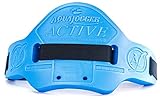
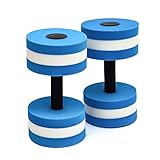
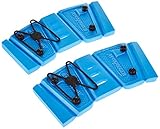
AquaJogger is the leader in deep water running equipment. At the very minimum, you need a waist flotation belt to run in the pool comfortably. The design of the belt offers you enough buoyancy to be able to run in the water, keeping yourself upright without sacrificing form.

If you’re looking to maximize the water resistance challenge of pool running, you’ll want to have water weights and ankle cuffs as well. I suggest waiting until you have mastered the form of deep water running before, ahem, jumping in to the deep end with the extra resistance.
Using an interval timer is the easiest way to keep track of your pool running workout. If you have an apple watch or other sport watch like a Garmin, you definitely already have an interval timer. Even my affordable but trusty Timex Ironman has an interval timer.
Sometimes it can be hard to hear a wristwatch beep with your arm in the water. In that case, I recommend a separate interval timer like Gymboss that you can leave on the side of the pool. Bonus: its digits are easy to read while you run by.
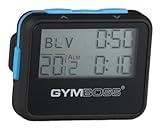
- Compact interval timer times one or two intervals between two seconds and 99 minutes.
Regardless of if you use your watch or a separate timer, set your intervals before you hop into the pool, and you’ll be ready for a great workout.
Is Deep Water Running Really a Good Workout?
By mimicking the mechanics of running but eliminating the impact, aqua jogging workouts are one of the best forms of injury rehab for runners. It is also a great easy/recovery run day while marathon training. Deep water running delivers the benefit of muscular and cardiovascular strengthening without the pounding of road running.
But I was curious about whether I would feel like I got a good workout, or would it be like paddling around the pool? (In which case, my time would be better spent by swimming.) Let’s just say I was skeptical!
I bought an AquaJogger Active belt and put it on. At first I was concerned that I should have bought the women’s belt, as I had to cinch mine as tight as it would go to fit around my waist. Once I got in the pool, the belt stayed right where it was supposed to, and I was off and running.
An Introductory Deep Water Running Workout
I was surprised by how easy it was to get a comfortable running motion in the water. Immediately, I felt my hamstrings working hard. This was a good thing! I had to remind myself to drive my knees at the start of each stride, as I felt myself want to get lazy and not work so hard against the water.
I spent about 10 minutes running easy, then did 10 minutes of 1 minute easy and 1 minute hard, and finished with 5 minutes easy.
Because I didn’t want to overdo it the first day, I kept the workout short. I did a bit of stretching on the pool steps to close my workout. That was a good choice, as I was still a bit sore the next day. My hamstrings were more sore than when I run on the road.
Aqua Jogging Workouts for Intermediate Pool Running
The next time I got in the pool, I cut my warm up down to 5 minutes and did 20 minutes of alternating 1 minute easy effort and 1 minute hard effort. I kept a 5 minute cool down.
Again, I stretched my hamstrings, quads, and outer hips before getting out of the pool. Though I was decidedly less sore the day after, I still felt like I’d gotten a good workout.
A second option for intermediate deep water runners is to extend the hard effort interval. Because you don’t get out of breath from aqua jogging workouts in the same way as you do from road running workouts, it is harder to force yourself to keep a higher turnover and tempo in the water. I found a hard interval of 3 minutes about as long as I could go and really keep the focus to push with maximum effort.
Adding water weights makes keeping form a bit more challenging, but it’s a great way to ramp up the intensity of your pool running workouts. Once you get the hang of the arm swing with water weights, deep water running becomes much more challenging!


How does deep water running equate to running on the road?
I’ve continued to incorporate deep water running into my weekly workouts. I am for a 30 minute session– any more and I get bored– where I include intervals for the bulk of the workout. Using the Rate of Perceived Exertion to monitor my efforts, I can push myself to work hard during the high intervals.
The intensity of my breath is really a good enough measurement of whether I’m running easy or hard. Surprisingly, it’s not hard to work up a sweat even while in the water.
HOT TIP: Keep a water bottle with a straw on the pool deck during your aqua jogging workouts. You still need to hydrate, even though you are running in water. Your insides need water, too!

- PERFORMANCE: Made from 100% Virgin Sourced 18/8 Food Grade Stainless Steel. 100% resistant to oxidation, rusting, and corrosion. 100% BPA Free. Cold 24 hours. Hot 8 hours.
I haven’t yet been able to get my cadence (number of footfalls) up to the recommended range of 70-75/minute, even when I’m running a hard interval. Perhaps this is because my natural cadence even while on land is slower than average. Or maybe I could use a little more study of my deep water running technique.
At this point, so long as I feel I’ve put in a good effort, am breathing hard, and am tired at the end of the workout, that is good enough for me.
Who can benefit from pool running?
Any runner! For real!
Most people I know who live in hot, humid climates dread training through the summer. I am no exception. I’ve found, though, that aqua jogging workouts in the comfort of my own backyard swimming pool are rather enjoyable. I can close my eyes, settle into my breathing pattern, and run. Finding the zen-like zone of peace is never something I’ve done while running in the Austin summer heat before.
Even though I still don’t have a fast cadence in the pool, I used aqua jogging workouts as an integral component of my training plan for Comrades Marathon. I firmly believe it kept me healthy through months and months of ultramarathon training. If you log a lot of miles, give your body a break and get some of them done in the pool!
Aqua jogging workouts are a also great option for recovering from injury. For diehard runners (like me!), being able to mimic the muscle pattern of running even while sidelined with injury feels good.
Many YMCAs offer deep water running classes. If you don’t have a pool yourself, look into taking a class. Having an instructor who can help assess your form and offer tips will give you confidence to try aqua jogging workouts on your own.
Hop on in to the pool and give deep water running a try!
Karen Shopoff Rooff is an ACE certified personal trainer and health coach with more than 20 years’ experience running marathons and ultramarathons. The Marathon Finish Line blog is for informational purposes. Please seek advice from a medical practitioner before engaging in a new fitness program.

This is probably a dumb question… do you move in the pool? Or, run in place?
It depends…in my own pool, I move around. In a public pool, I try to stay in a smaller, more stationery rhythm.
Not dumb at all! I run in the deep end at the YMCA pool and move very slowly from the back of the pool to the center lifeguard’s stand, which is where my feet begin to touch. I just go back and forth — with people watching me, probably thinking that I’m nuts. I’ve yet to see anyone else DWR there! If you were in a small or crowded pool, you could tether yourself to something at the side and that would keep you from moving. I haven’t tried it yet, but have read that it increases the workout.
Keep on running! It’s such a good way for people to get no-impact cardio. Keep it up!
Very informative and useful