

If you’ve ever debated in your head “Should you pop a blister or let it recover on its own?”– you’re a runner.
If you’ve ever wondered “Does it hurt to pop a blister?”– you’re a runner.
If you’ve ever had a pedicure and the nail tech has been grossed out by your feet, you’re a runner.
We could probably all agree that feet are, for the most part, weird and funky looking. But in the oft-spoken words of my mother: “Feet are critical for good understanding.”
(Get it? Under. Standing. I come from a whole long line of hilarious jokers.)
This post contains affiliate links. As an Amazon Associate I earn from qualifying purchases. Purchasing via these links gives me a small commission at no cost to you. Please see my privacy policy for more information.

Blisters from Running: A Marathoner’s Reality
I’m not sure I’ve ever met a runner who hasn’t gotten a blister. It’s just part of the sport. Even if you have your favorite shoes and the best socks in the world, the combination of moisture and terrain can still mean blisters.
And once you have a bulbous blister, what do you do?
(Disclaimer: I am not a podiatrist. I am not a physician. I am a runner. I ran my first organized race in 1980. I ran my first marathon in 1998. That’s a lot of years in which to get blisters. As we say in running, your mileage may vary.)
Are you supposed to pop blisters?
According to the Cleveland Clinic, the short answer is no. There is a risk of infection if you break the body’s perfect little blister bandaid.
But as a runner, I had more training to do. And the blister was a problem. I knew if I kept running with it, I’d either change my gait (which can be the root of an injury) or it would rub enough to pop on its own.
So I opted to follow a blister recovery and care protocol that yields excellent results for me.
How to pop a blister
Step one:
Admire the blister. Note your unbelievable toughness and grit for being able to survive such an assault from your footwear. Know that not just anyone can make such a glorious creation themselves.
This blister is the beauty I picked up in the Grasslands Trail Marathon.

Step Two:
This is the step where blister recovery begins.
First off, assemble your medical supplies: rubbing alcohol, a safety pin, a match, and a clean napkin or paper towel.
What are all of these items for? I use alcohol to swab the blister clean, a pin sterilized by holding it in fire for puncturing, and a clean napkin to catch the pus and blood. (EEEwwwwww!)

Step Three:
Either you (if you are brave and a little crazy) or someone you love (who clearly also really loves you) takes the sterilized pin and pokes a hole in the blister. Remember that the skin over the blister is thick, so it may take a fair amount of pressure to puncture.
After the blister has been opened, gently squeeze the pus and blood into the napkin.
Check to make sure there are no smaller blisters adjacent to the main offender. Often runners get two or more blisters right next to each other.
My husband is my blister medic. But he’s a little photo shy, so there’s no action shots. Also, I hate blood. So I wouldn’t be much of a photographer anyway.
Does it hurt to pop a blister?
Nope. Not at all. If you (or someone you love) has a steady hand and moves gently, it doesn’t hurt at all to pop a blister.
Whew!
Step Four:
Praise your blister medic for a job well done.
Breathe a sigh of relief that you just might survive this incident and live to run again.

Step Five:
Soak your foot in epsom salt. The salt will help dry out the blister. It also never hurts to get a little more magnesium in the body after a blister-inducing activity. Your muscles will thank you.
In fact, go ahead and soak both feet because it feels so good!

Step Six:
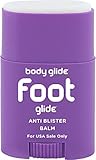
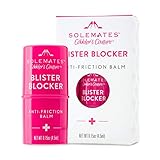
When it comes time that life requires you to wear shoes again, grab a little Friction Block and slather it on the blister. But do NOT put a bandage on top of it. The goal of blister recovery is to get the skin to dry out as quickly as possible. A bandage would trap moisture and delay the blister recovery timeline.

Yes, this is the very same product I had in my pocket the entire Grasslands Marathon, when, from 90 minutes on, I felt my foot rubbing and a blister forming. Did I stop and use it? No, I did not. Learn from me!
Yes, I should have stopped at any of the endless opportunities to take care of my foot before I got the gnarly blister. Now I know better. Buy some blister blocking stick goodness and give it to all your athletic friends. Remind them to use it liberally.

In the 16 days after I rubbed The Grossest Blister of All Time, I managed to run over 70 miles without a problem. But I am not a podiatrist, nor a physician of any kind. What I’ve described in this post works for me. Seek medical attention from a real, qualified professional when warranted. The internet doesn’t count!
Wondering how you got that blister even if you’re not a runner? If you do any kind of interval workout, you’re likely shifting your weight quickly in your feet. That’s precisely the type of movement that creates blisters.
Regardless of what type of physical activity you pursue, choosing the right exercise shoes is a critical first step. You’ve likely experienced that awful rubbing that comes from a new pair of shoes or an annoyingly bunched up sock that results in a blister.
Even if you can’t identify with athletic footwear that seems out to get you, I think dress shoes– for both men and women– are unequivocally nasty in terms of their role as a blister proving ground.
Wishing you many happy miles of blister-free running!
Karen Shopoff Rooff is an ACE certified personal trainer and health coach with more than 20 years’ experience running marathons and ultramarathons. The Marathon Finish Line blog is for informational purposes. Please seek advice from a medical practitioner before engaging in a new fitness program.